The Don drawbridge at Rostov: why one damaged rail crossing matters for Russia's southern front
On 10 October, drones damaged a railway drawbridge over the Don between Rostov-on-Don and Bataysk, halting traffic on both tracks and delaying dozens of trains. The bridge did not fall, but it sits at the start of the supply chain that feeds Russia's southern front and occupied Crimea.

 Illustration
Key points
- Russia's own North Caucasus Railway said a drone attack damaged the bridge and stopped traffic on both tracks. CONFIRMED – Confirmed: backed by at least two independent, reliable sources or by direct evidence.
- Around 25 long-distance trains were delayed, according to Russian railway figures relayed by Ukrainian media.
- Claims that the bridge's lifting mechanism was hit have not been confirmed, and Ukraine has not claimed the strike. UNVERIFIED – Unverified: reported, but we could not check it. Treat with caution.
- The Kerch Bridge, the Kerch ferries and the land corridor into Crimea have all been squeezed this year.
- Every alternative route Moscow builds to the south still starts by crossing the Don at Rostov.
Watch the video
In the dark hours of 10 October 2026, drones crossed into the skies over Rostov-on-Don and went after a target most people outside Russia have never heard of. By morning, a railway drawbridge over the Don had been damaged, traffic on both its tracks had been halted, and long-distance trains heading into southern Russia were sitting still.
It was not the most spectacular explosion of this war. Nobody filmed a span tumbling into the river, and the bridge did not fall. But this is a story about something less visible and, in the long run, perhaps more dangerous for Moscow: the slow squeeze on the supply lines that keep Russia’s southern front and occupied Crimea running.
What happened that night
The bridge sits on the line between Rostov-on-Don and Bataysk, a satellite city about 15 kilometres away on the opposite bank of the Don. It is a lift bridge: a section can be raised to let river traffic move along the Don towards the Sea of Azov.
Russia’s own North Caucasus Railway said a drone attack had damaged the bridge and that movement on both tracks had been suspended. Later that morning it said trains were running again. Source [1] CONFIRMED – Confirmed: backed by at least two independent, reliable sources or by direct evidence.
In strict terms it was a short interruption, but the knock-on effect told a bigger story. The railway first acknowledged that 14 long-distance and two commuter trains had been held up, with delays from 57 minutes to 3 hours 40 minutes. Source [1] As the day went on, the number kept climbing: local monitoring channels and Russia’s Federal Passenger Company, as relayed by Ukrainian media, put the eventual count at around 25 long-distance trains. Source [3] The Moscow Times, citing Russian Railways, summed it up: “Dozens of trains were delayed.” Source [2]
The bridge was not the only target. The same night brought a large drone attack across Rostov region. The regional governor, Yuri Slyusar, said six people were injured and acknowledged delays to rail traffic. Two vessels were reported damaged in the port city of Azov, and an oil products terminal in Rostov-on-Don, belonging to the Novoshakhtinsk refinery, caught fire.
Honesty matters here. The full extent of the damage to the drawbridge is still unclear. Monitoring channels claim the lifting mechanism itself was hit. UNVERIFIED – Unverified: reported, but we could not check it. Treat with caution. If so, it creates an awkward dilemma for Russia: a lift bridge that jams in the raised position blocks the railway; one that jams in the lowered position blocks ships on the Don. But there is no official confirmation that the bridge lost its ability to open, and Ukraine has not formally claimed the strike.
What can be said with confidence: the bridge was damaged, traffic stopped in both directions, and the delays rippled across the southern rail network within hours.
Why this bridge matters
The answer lies in geography. Bataysk has long served as a rail and road junction for the whole Rostov area, with lines fanning out towards Krasnodar, the Caucasus and Salsk, and it works as a sorting centre for freight moving through the Rostov industrial hub. Traffic coming down from central Russia towards the North Caucasus, the Black Sea coast and Crimea has to pass through this area, and the Don is the natural barrier that must be crossed to get there.
There is also something unusual about this target. Most railway bridges are slabs of steel and concrete resting on heavy piers, notoriously hard to destroy. A drawbridge is different: its strength depends on its machinery – the parts that lift, lower and lock the span. Damage those and you may not need to bring the bridge down at all. You only need to make it unreliable. A crossing that might jam, that has to be inspected after every attack, that forces managers to hold trains on either side just in case, slows everything that depends on it.
A railway army
Russia’s army has always been a railway army. That is not a slogan but a structural feature Western analysts have pointed to since the first weeks of the full-scale invasion.
In April 2022, Emily Ferris of the Royal United Services Institute, the British defence think tank, wrote in Foreign Policy that Russia’s military has an overwhelming dependence on railways, and on lorries beyond the end of the tracks. Source [4] A Jamestown Foundation analysis that summer noted that Russian logistics warehouses are almost always placed next to railways, and argued that when the Russian army loses access to rail, its whole logistics system starts to break down. Source [5] Lorries can only carry supplies so far from a railhead before the arithmetic of fuel, drivers and distance stops working. In the trains, in other words, lies the backbone of the war effort.
The shrinking list of crossings
Over the past year, the list of reliable crossings into Crimea and the occupied south has been shrinking fast.
The Kerch Bridge. Vladimir Putin’s showpiece was badly damaged in October 2022 and again in July 2023. As early as 2024, satellite analysis by the Ukrainian intelligence firm Molfar, reported by The Independent, found that military freight trains had essentially stopped crossing it for several months. According to British defence intelligence, as published by the Kyiv Post in June 2026, lorries are not allowed onto the bridge at all and must use the ferries instead. Source [6] Whatever Moscow says publicly, the bridge no longer carries the heavy military load it was built for.
The Kerch ferries. That pushed Russia towards the sea, and in the summer of 2026 Ukraine went after the ferries. On 19 July, Robert Brovdi, commander of Ukraine’s Unmanned Systems Forces, known as “Madyar”, announced the results of a two-week drone campaign that began on 6 July. Before it, four ferries worked the crossing, with a fifth vessel in reserve. According to Brovdi, they had been moving 180 to 250 vehicles a day, roughly 80% of it serving the Russian military. He said three of the five had been destroyed or damaged beyond repair, and that the other two could only operate as barges towed by tugs. His bottom line: the Kerch ferry crossing had lost 75% of its capacity. Source [7] CLAIMED – Claimed: stated by a government, army or official, but not independently verified. It is a Ukrainian military claim, and Russia has given no detailed account of its losses, but it was reported consistently by Ukrainska Pravda, The Kyiv Independent and the maritime trade press, and nothing Russia has said since has seriously contradicted it.
The land corridor. What remains is the roads and railways from Rostov through occupied southern Ukraine, around the Sea of Azov and down into Crimea – in 2026, one of the most dangerous stretches of road in Europe. The French open-source analyst Clément Molin has spent months counting verified strike videos of Russian lorries hit by Ukrainian drones in the occupied south. By his tally, nearly 600 lorries and military vehicles were hit in June 2026 alone, around 20 a day, and the pace kept rising into July; in one five-day stretch in late June, 193 were taken out. Source [8] Molin counts only footage he can confirm, so the real total is probably higher. He also notes that roughly a third of the vehicles hit are formally registered as civilian, though most were carrying fuel or working for the military.
You do not have to destroy every lorry to choke a supply route. You only have to make every journey dangerous enough, often enough, that drivers hesitate, convoys slow down and the whole system loses speed.
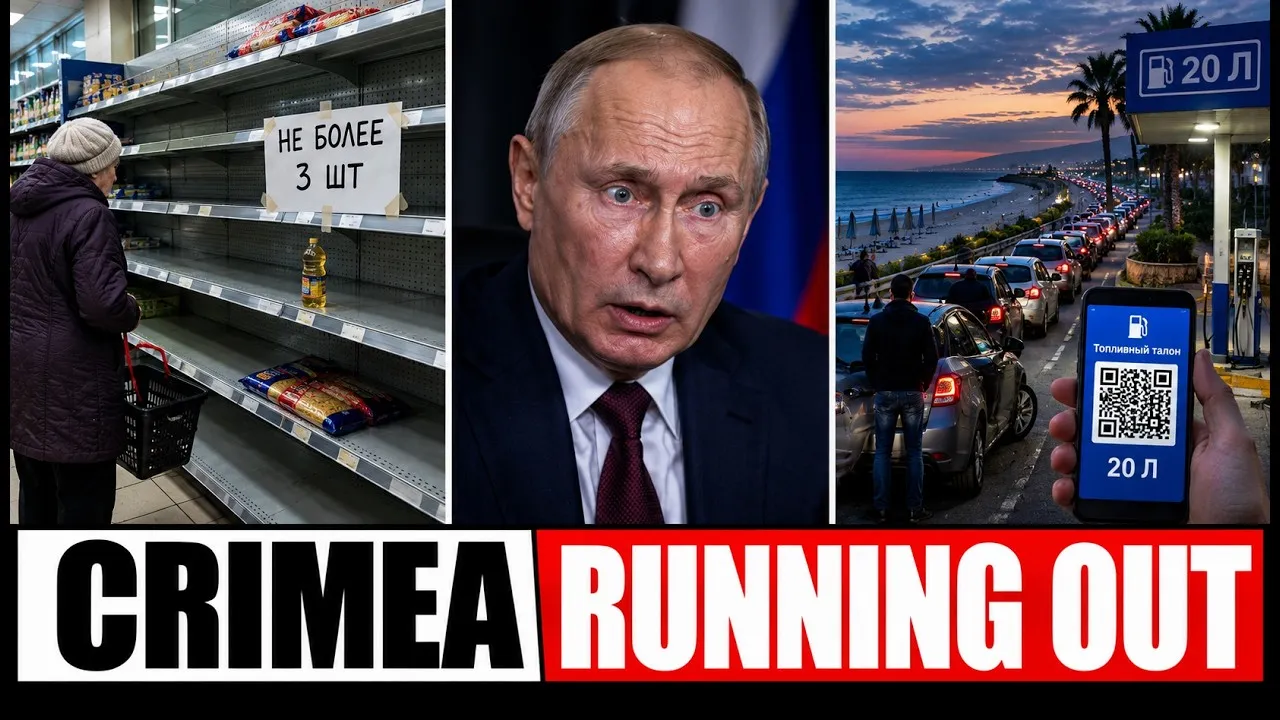
The effects showed quickly. In late May, after Ukrainian drones restricted traffic on the overland route, the Russian-installed authorities in Crimea introduced fuel rationing. Sergei Aksyonov, the Moscow-appointed head of Crimea, asked residents not to stockpile petrol; sales were capped at 20 litres, public transport got priority and filling canisters was banned. Novaya Gazeta Europe described long queues at petrol stations.
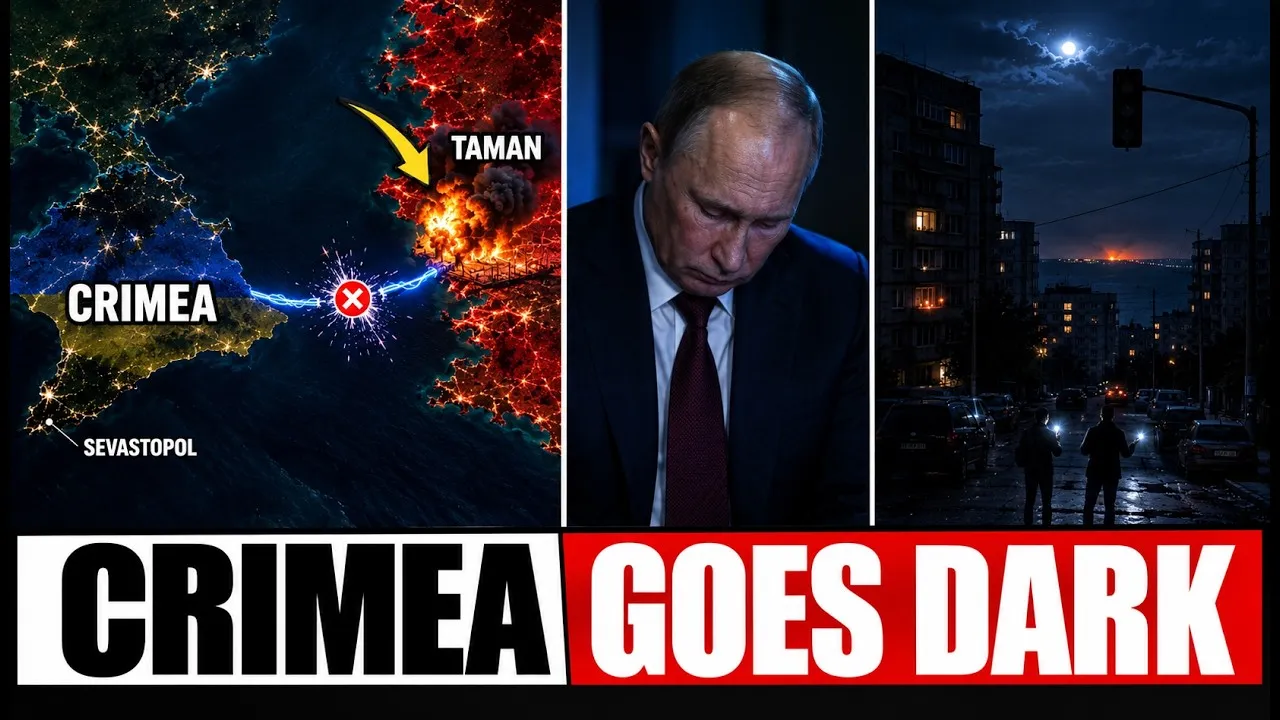
The bridges into Crimea. In June, Ukrainian forces struck the Chonhar bridge, the main road link between occupied Kherson region and Crimea – first on the night of 7 June, again within days and once more on 15 June, when Vladimir Saldo, the Russian-installed head of occupied Kherson region, admitted that traffic through the Dzhankoi checkpoint had been completely halted. CONFIRMED – Confirmed: backed by at least two independent, reliable sources or by direct evidence. The bridge linking Henichesk to the Arabat Spit, a second road into Crimea, was also targeted and closed. In mid-June, drones attacked a railway bridge over the North Crimean Canal near Rozdolne, and satellite imagery published by the Ukrainian outlet Militarnyi soon showed it badly damaged.
Moving the pressure upstream
Put it together and a pattern appears. The Kerch Bridge no longer carries the heavy military load. The ferries have been gutted. The roads through the occupied south are a shooting gallery. The bridges into Crimea are struck again and again. And every one of those routes draws its cargo from the same place: the rail hub at Rostov-on-Don and Bataysk, where freight from the Russian interior crosses the Don and turns south.
That is why the strike of 10 October stands out. Instead of hitting the last link before the front, it touched one of the first. A damaged bridge in Crimea affects supplies going to Crimea; a damaged bridge at Rostov can, at least for a few hours, affect almost everything heading south at once.
There are signs Moscow saw it coming. On 6 October, four days before the attack, the Ukrainian partisan movement Atesh claimed that Russia’s Southern Military District headquarters had ordered urgent preparations at key bridges: reinforcing the Don crossings in the Rostov hub, preparing alternative routes, and protecting bridges with round-the-clock National Guard patrols, anti-drone netting, electronic warfare, backup pontoon bridges and engineering crews. Source [9] These claims cannot be independently checked. UNVERIFIED – Unverified: reported, but we could not check it. Treat with caution. If accurate, they show that the Russian command understood how exposed the Don crossings were – and that whatever was rushed into place was not enough.
Why Russia struggles to protect it
Part of the answer is volume. Ukraine now routinely sends large waves of long-range drones at Russian regions in a single night, and it takes only a few getting through to damage sensitive machinery like a lift span. Part of it is the nature of the target: a railway network is thousands of kilometres of track, hundreds of bridges, junctions, signal boxes and depots, and every air-defence system placed in Rostov is one not protecting a refinery, an airfield or Moscow. And then there is cost: a long-range drone is cheap compared with the interceptor fired to stop it.
The strike also fits a broader shift in Ukrainian strategy in 2026. Rather than chasing one decisive blow, Ukraine has applied steady pressure everywhere at once – ferries, fuel terminals, road convoys, canal bridges, refineries. Each strike can be repaired or worked around; together they create friction that never lets up. The railway is where those pressures meet: when ships cannot cross and lorries cannot safely use the roads, more has to go by train, and when trains are held at a choke point like Rostov, everything behind them backs up.
What this does not mean
None of this means the Russian supply system is about to collapse. Russia has deep reserves of rolling stock, railway engineers and experience of keeping lines open under fire. The Rostov drawbridge was carrying trains again within hours.
Russia has also spent years building alternatives. In March 2023, Putin announced a new railway from Rostov-on-Don through occupied Ukrainian territory towards Crimea, eventually meant to reach Sevastopol as a backup for the Kerch Bridge. A new coastal section of roughly 60 kilometres opened in occupied Donetsk region that spring. Ukraine’s military intelligence described the planned route along the Azov coast – through Taganrog, Mariupol, Berdiansk and Yakymivka down to Dzhankoi – and judged it highly unlikely to be finished on Russia’s timetable. CLAIMED – Claimed: stated by a government, army or official, but not independently verified.
And here is the catch: even that new railway begins in Rostov. Every alternative Moscow builds to the south still depends on getting cargo across the Don first. The more Russia invests in the land corridor to escape the vulnerable Kerch Bridge, the more it funnels its logistics through the area hit on 10 October.
What to watch next
The bridge held and the trains moved again, but the message was clear: no crossing in the south, not even one well inside Russia, can be treated as safe. The question now is whether this was a one-off or the start of a sustained campaign against the Don crossings. If Ukraine can return to Rostov again and again, the way it returned to the Chonhar bridge and the Kerch ferries, the delays will stop being measured in hours.
Sources
- North Caucasus Railway (Russian Railways), “Statements on the drone attack and train delays”, .
- The Moscow Times, “Report on dozens of delayed trains, citing Russian Railways”, .
- Ukrainian media, “Reports relaying Russian railway and monitoring-channel figures”.
- Foreign Policy (Emily Ferris, RUSI), “Analysis of the Russian army's dependence on railways (April 2022)”.
- Jamestown Foundation, “Analysis of Russian military rail logistics”.
- UK Defence Intelligence, via the Kyiv Post, “Update on restrictions on the Crimean Bridge”.
- Ukrainska Pravda and The Kyiv Independent, “Reports on the drone campaign against the Kerch ferries”.
- Clément Molin (open-source analyst), “Count of verified strike videos of Russian lorries in the occupied south”.
- Atesh (Ukrainian partisan movement), “Report on Russian orders to protect the Don bridges”, .